
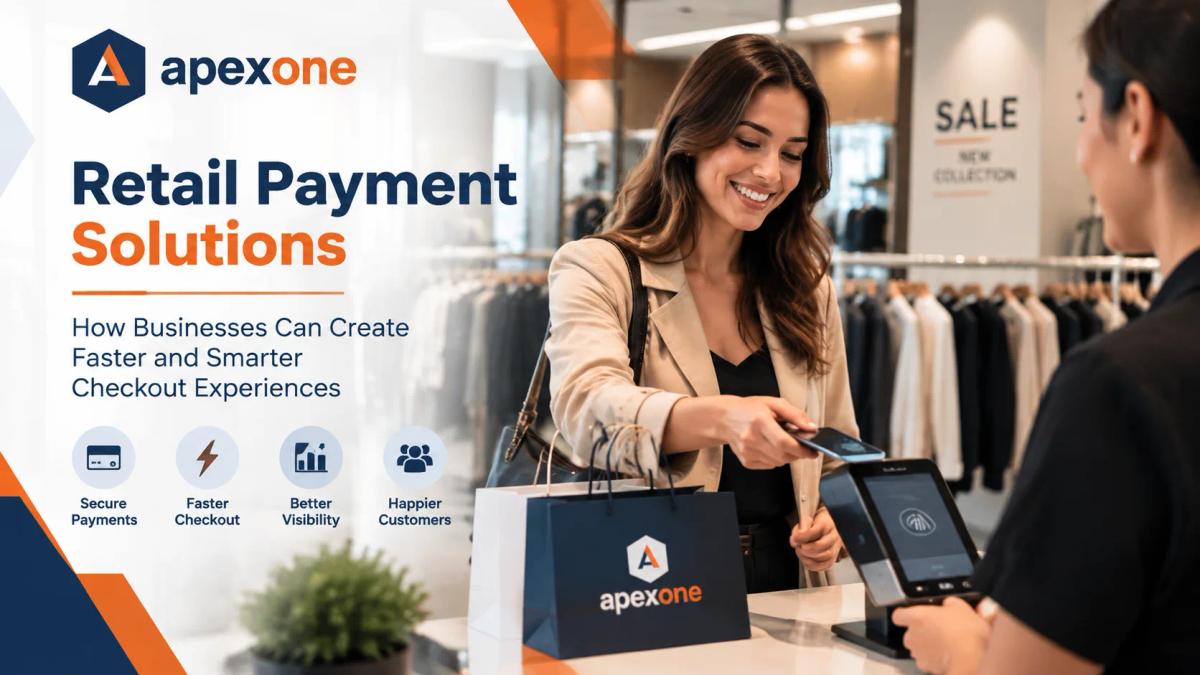
Retail Payment Solutions How Businesses Can Create Faster and Smarter Checkout Experiences
Modern customers expect fast, simple, and flexible checkout experiences. Learn how retail payment solutions help businesses improve payment workflows, support multiple payment methods, reduce checkout friction, and create smoother customer experiences with modern payment technology.
Retail has changed significantly. Customers today expect more than quality products and competitive prices. They expect convenience, speed, and a smooth experience from the moment they enter a store until the final payment is completed.
The checkout process has become one of the most important parts of the customer journey. A customer may enjoy the products, appreciate the service, and still leave with a negative impression if the payment experience is slow, complicated, or inconvenient.
This is why modern retailers are investing in better payment technology. Retail payment solutions are no longer only about accepting credit cards. They are about creating a complete payment experience that helps customers pay easily, helps employees work efficiently, and gives business owners better control over their operations.
A modern retail payment setup can connect payment processing, POS technology, reporting, customer preferences, and daily operations into one streamlined workflow. Instead of treating payments as only a transaction, successful retailers are using payment technology as a tool to improve customer experience and support business growth.
Apex One Payments helps businesses create better checkout experiences with retail payment solutions, POS systems, payment terminals, and payment processing tools designed around the needs of modern retailers.
Why Checkout Experience Matters More Than Ever in Retail
For many customers, checkout is the final interaction they have with a business before leaving the store. This final step can influence whether they remember the shopping experience positively or negatively.
Retailers often focus on product selection, store design, advertising, and customer service, but the payment experience deserves the same attention. Customers who are ready to purchase should not face unnecessary delays because of outdated equipment, limited payment options, or inefficient checkout processes.
Modern customers expect payment experiences that are fast, simple, secure, and flexible. They want to use the payment method that works best for them, whether that means a traditional card payment, contactless payment, mobile wallet, or another digital option.
Businesses that provide a smoother checkout experience can improve customer satisfaction and create stronger relationships with shoppers. A convenient payment process removes friction at the most important moment — when the customer is ready to complete the purchase.
This is where retail payment solutions become valuable. They allow businesses to improve checkout speed, support customer preferences, and create a more professional buying experience.
The Evolution of Retail Payments Beyond Traditional Card Terminals
For many years, the standard retail payment setup was simple: a checkout counter, a card terminal, and a cash register. This approach worked when most customers paid through traditional in-store transactions.
However, retail has become much more connected. Customers now interact with businesses through multiple channels. They may discover products online, visit a physical location, compare options through digital platforms, and expect the same level of convenience throughout the entire buying process.
Because customer behavior has changed, payment systems must also evolve.
A basic card terminal can complete a transaction, but many retailers need more than transaction approval. Growing businesses need payment technology that supports flexible payment methods, better visibility, faster checkout, and improved customer interactions.
Modern retail payment solutions help businesses move from simple payment acceptance toward a complete checkout ecosystem. This allows retailers to create experiences that match how customers shop today.
What Are Retail Payment Solutions?
Retail payment solutions include the technology, hardware, software, and services that help businesses accept, manage, and understand customer payments.
These solutions can include POS systems, credit card processing, payment terminals, contactless payment capabilities, digital payment options, reporting tools, and other technologies that support daily retail operations.
The purpose of a modern payment solution is not only to process transactions. It is to help businesses create a better connection between customers, employees, and business operations.
For example, a clothing retailer may need a fast checkout experience during busy shopping periods. A specialty store may need better transaction reporting and payment visibility. A growing multi-location retailer may need consistent payment workflows across different locations.
The right retail payment solution depends on the way the business operates, the expectations of its customers, and the challenges it needs to solve.
Instead of selecting payment technology only based on price or hardware, retailers should consider how the solution improves the complete customer payment experience.
How Modern Payment Solutions Help Retailers Create Faster Checkout Experiences
Checkout speed has a direct impact on customer satisfaction. Customers do not want to spend unnecessary time waiting after they have already decided to buy.
Long checkout times can happen for many reasons, including outdated payment terminals, slow transaction processing, limited payment options, disconnected systems, or manual processes that create unnecessary steps.
Modern payment solutions help retailers reduce these challenges by creating faster and more efficient checkout workflows.
For example, contactless payment technology allows customers to complete transactions quickly. Modern POS systems help employees process payments more efficiently. Connected payment systems reduce manual work and improve transaction accuracy.
A faster checkout experience does not mean rushing customers. It means making the payment process easier and removing unnecessary barriers between the customer and the purchase.
For retailers, improving checkout efficiency can lead to better customer satisfaction, smoother operations, and a stronger overall shopping experience.
The Role of POS Systems in Modern Retail Payment Solutions
A POS system is no longer just a device that accepts card payments. Modern POS technology has become an important part of retail operations.
Today’s POS systems help businesses manage transactions, organize payment information, improve checkout workflows, and gain better visibility into business activity.
A well-designed POS system can help employees complete transactions more efficiently while giving business owners useful information about sales and payment performance.
For retail businesses, the right POS solution can make everyday operations easier. It can support faster checkout, better payment management, and a more organized customer experience.
However, the best POS system is not always the one with the most features. The right solution is the one that matches the retailer’s workflow and supports the way customers actually shop.
Retail businesses can explore POS hardware and payment terminals designed to support modern payment acceptance and improve checkout reliability.
Why Retailers Need More Than a Basic Card Terminal
A basic card terminal can complete a payment, but modern retailers often need much more than simple transaction processing. As customer expectations continue to change, businesses need payment technology that supports faster checkout, flexible payment options, better reporting, and smoother daily operations.
Many businesses start with a simple payment terminal because it meets their immediate needs. However, as the business grows, those basic systems can become limiting. Retailers may need better visibility into transactions, support for additional payment methods, improved employee workflows, and tools that help them understand their business performance.
A modern retail payment solution combines hardware, software, and payment services to create a more complete experience. Instead of using a device only to accept payments, businesses can use payment technology to improve the entire checkout process.
For example, a growing retail store may need to handle more customers during busy hours, accept different payment preferences, manage transaction information more effectively, and provide a consistent experience across multiple locations.
This is why retailers are moving from basic payment terminals toward more complete payment solutions that support long-term business growth.
How Contactless Payments Are Transforming Retail Checkout
Customer payment preferences have changed significantly. Many shoppers now expect businesses to provide quick and convenient ways to complete transactions.
Contactless payments have become an important part of this change. Customers increasingly use contactless cards, mobile wallets, and other digital payment methods because they provide a faster and simpler checkout experience.
For retailers, supporting contactless payments is not only about offering another payment option. It is about creating a checkout process that matches modern customer expectations.
During busy shopping periods, small improvements in checkout speed can make a meaningful difference. Faster transactions help reduce customer waiting times, improve store efficiency, and allow employees to focus more on providing better service.
Modern payment terminals allow retailers to support these changing payment behaviors while maintaining a secure and professional payment experience.
Businesses that adapt to new payment preferences can create stronger customer relationships and provide the level of convenience shoppers expect.
The Importance of Connected Payment Experiences for Retail Businesses
Retail businesses today operate across multiple customer touchpoints. A customer may discover a product online, visit a physical store, make a purchase through different channels, or interact with a business through digital platforms.
When payment systems operate separately, retailers may face challenges with transaction tracking, reporting, and understanding the complete customer journey.
Connected payment experiences help businesses create a more consistent workflow by bringing different payment activities together.
This approach allows retailers to improve visibility, manage transactions more efficiently, and provide customers with more flexible ways to complete purchases.
For example, a retailer that accepts payments both online and in-store can benefit from having better control over payment information and customer interactions instead of managing disconnected systems.
Apex One Payments explains the importance of connected payment experiences through its omnichannel payment solutions content, helping businesses understand how multiple payment channels can work together more effectively.
Why Payment Visibility Matters for Retail Success
Accepting payments is only one part of running a successful retail business. Understanding payment activity is equally important.
Retailers need clear information about transactions, sales performance, customer payment preferences, and overall business activity. Without proper visibility, business owners may struggle to identify problems or make informed decisions.
Modern retail payment solutions provide better reporting capabilities that help businesses understand what is happening after every transaction.
Better payment visibility allows retailers to track performance, review transaction patterns, understand customer behavior, and improve operational decisions.
A payment system should not only process money. It should provide useful information that helps businesses operate more effectively.
When retailers have better access to payment data, they can make smarter decisions and create more efficient workflows.
Common Payment Challenges Retailers Should Avoid
Many retail businesses continue using payment systems that create unnecessary challenges without realizing there are better options available.
One common challenge is relying on outdated payment hardware. Older terminals may not support modern payment methods, may slow down checkout, and may create a less convenient experience for customers.
Another challenge is having disconnected systems. When payment processing, reporting, and business operations are separated, employees may spend more time managing information manually instead of focusing on customers.
Limited payment flexibility can also create problems. Customers have different preferences, and retailers that support more convenient payment options can create a smoother buying experience.
Retailers should also avoid choosing payment solutions only based on short-term cost. The cheapest option may not always provide the tools, support, and flexibility needed for future growth.
The right payment solution should simplify operations, improve customer experience, and support the long-term goals of the business.
Choosing the Right Retail Payment Solution for Your Business
Every retail business has different requirements. A small specialty store may need a simple and efficient checkout system, while a larger retailer may require advanced payment capabilities, reporting tools, and support for multiple locations.
The right retail payment solution should be selected based on the way the business operates and the expectations of its customers.
Retailers should consider several factors when evaluating payment technology, including checkout speed, payment flexibility, hardware reliability, reporting capabilities, security, and future scalability.
A good payment system should support the current needs of the business while providing room for growth as customer expectations and business operations change.
The payment provider also plays an important role. Businesses need a partner that understands their goals and can recommend solutions based on their actual requirements instead of offering a one-size-fits-all approach.
How Apex One Payments Helps Retail Businesses Improve Checkout Experiences
Apex One Payments helps retailers create better payment experiences through modern payment solutions designed around real business needs.
From payment processing and POS systems to payment terminals and connected payment workflows, Apex helps businesses improve the way they accept and manage customer payments.
The goal is not simply to provide payment equipment. The goal is to help retailers create smoother checkout experiences, improve operational visibility, and provide customers with convenient ways to pay.
Whether a retailer needs updated payment hardware, better payment processing capabilities, or a more organized checkout workflow, Apex One Payments provides solutions designed to support business growth.
Retail businesses can contact Apex One Payments to discuss their current payment setup and explore solutions that match their business goals.
Final Thoughts: Better Retail Payments Create Better Customer Experiences
The retail industry continues to evolve, and customer expectations are changing with it. Businesses are no longer competing only on products and prices. They are also competing on convenience, speed, and the overall experience they provide.
The checkout process is a critical part of that experience. A customer who has already decided to make a purchase should be able to complete that transaction quickly, securely, and without unnecessary complications.
Modern retail payment solutions help businesses achieve this by improving checkout efficiency, supporting flexible payment methods, providing better payment visibility, and creating smoother workflows for both customers and employees.
The right payment technology is not simply about accepting transactions. It is about helping businesses operate better and creating stronger connections with customers.
Retailers that invest in modern payment solutions can better adapt to changing customer expectations, improve operational efficiency, and build a more convenient shopping experience.
If your current payment setup feels outdated, disconnected, or limited, it may be time to review how modern payment technology can support your business goals.
Apex One Payments helps retailers create better payment experiences through payment processing solutions, POS systems, payment terminals, and retail payment technology designed for growing businesses.
Frequently Asked Questions
What are retail payment solutions?
Retail payment solutions are technologies and services that help businesses accept, manage, and process customer payments. They can include POS systems, payment terminals, credit card processing, contactless payments, reporting tools, and other payment technologies that improve retail operations.
Why are retail payment solutions important for businesses?
Retail payment solutions help businesses create smoother checkout experiences, support different payment preferences, improve transaction visibility, and provide customers with convenient ways to complete purchases.
How can retailers improve their checkout experience?
Retailers can improve checkout experiences by using modern payment terminals, supporting contactless payments, reducing unnecessary checkout steps, and choosing payment systems that match their business workflow and customer expectations.
What is the difference between a card terminal and a complete retail payment solution?
A basic card terminal mainly focuses on accepting payments, while a complete retail payment solution can provide additional capabilities such as POS functionality, reporting, multiple payment options, transaction visibility, and improved business management tools.
Do retail businesses need a POS system?
Many retail businesses benefit from POS systems because they help organize transactions, improve checkout efficiency, manage payment information, and provide better insight into business performance.
How do contactless payments help retail businesses?
Contactless payments allow customers to complete transactions quickly and conveniently. They help retailers reduce checkout friction and provide customers with the payment options they increasingly expect.
What payment options should retail businesses offer customers?
The best payment options depend on the business and its customers. Many retailers choose to support traditional card payments, contactless payments, digital wallets, and other flexible payment methods to create a better checkout experience.
How can Apex One Payments help retail businesses?
Apex One Payments helps retail businesses improve payment experiences through modern payment processing solutions, POS systems, payment terminals, and customized retail payment solutions designed around business needs.