
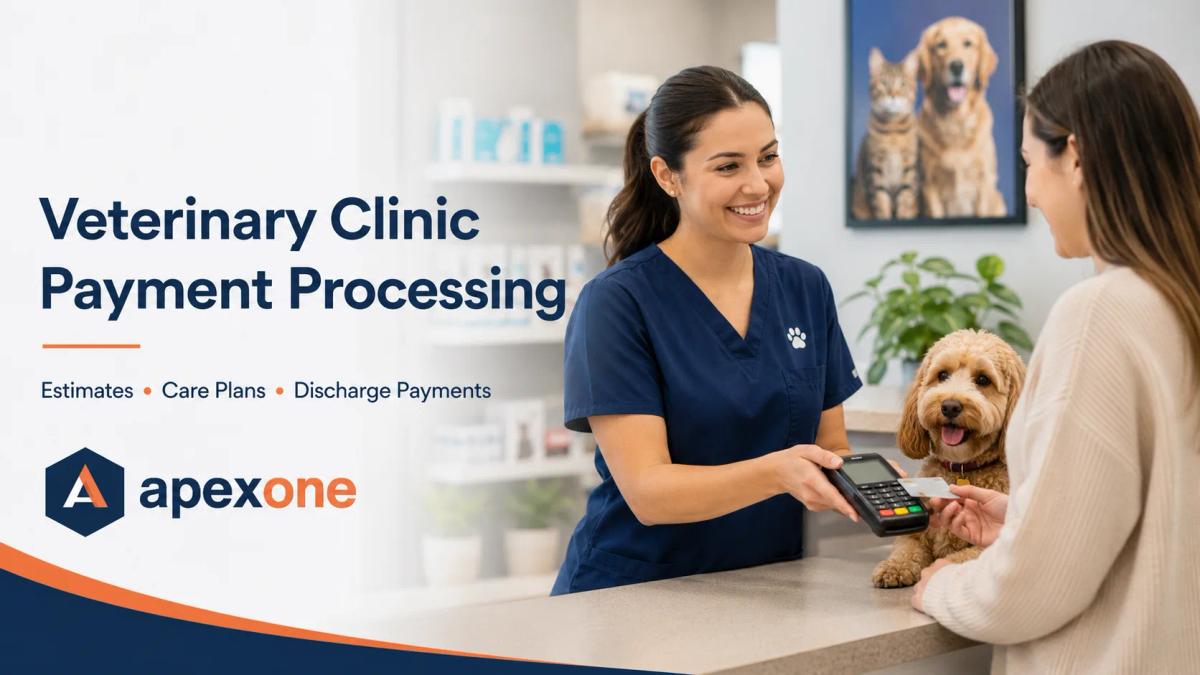
Veterinary Clinic Payment Processing How to Collect Estimates, Care Plans, and Discharge Payments Faster
Veterinary clinics often handle payments during stressful, emotional moments. This guide explains how estimate deposits, care plan billing, card-on-file, pay-by-link, secure terminals, and clear reporting can help clinics collect payments faster while keeping the experience respectful for pet owners.
Veterinary care is personal.
When a pet is sick, injured, or going through treatment, the owner is not thinking like a regular customer. They are worried, emotional, and trying to make the right decision quickly. At the same time, the clinic still has to explain the estimate, collect approval, take payment, manage follow-up care, and keep the front desk moving.
That is why veterinary payments need a different approach.
A vet clinic is not a retail store. The bill may change after an exam, lab work, imaging, medication, dental cleaning, surgery, or emergency care. Some visits are routine. Others involve urgent decisions. Some clients can pay the full amount right away. Others may need a care plan or a payment link after they review the estimate.
A strong payment workflow helps the clinic collect clearly without making the conversation feel cold.
Good veterinary clinic payment processing should help staff collect estimate deposits, send payment links, support care plan billing, accept card payments at checkout, keep receipts clear, and reduce unpaid balances. It should also make the process simple for pet owners, especially when they are already under stress.
This article explains what veterinary clinics should look for in a payment setup and how better payment workflows can help reduce front desk pressure, improve collections, and create a smoother experience for pet owners.
Why Veterinary Clinics Need a Different Payment Workflow
Veterinary clinics deal with a unique mix of medical care, customer service, estimates, and payment collection.
A routine wellness visit may be simple. A client checks in, the pet gets an exam, vaccines are given, and the owner pays before leaving. But many visits are not that straightforward.
A dog may need X-rays after an injury. A cat may need bloodwork before treatment. A pet may need dental work, surgery, emergency care, medication, hospitalization, or follow-up visits. The final amount may depend on what the veterinarian finds during the exam.
That makes payment collection more sensitive.
The clinic needs to explain the cost clearly without making the pet owner feel pressured. Staff may need approval before treatment begins. The owner may need time to review the estimate. A deposit may be needed before care starts. A balance may need to be collected at discharge.
This is why veterinary clinic payment processing should not be treated like a basic card terminal at the front desk.
A better setup supports the full flow. The estimate is prepared. The owner reviews and authorizes care. The clinic collects a deposit or payment. Treatment moves forward. The final balance is collected before or at discharge. Receipts and reports are clear for both the clinic and the pet owner.
When the workflow is organized, staff can focus more on care and less on awkward payment follow-up.
The Real Payment Problem for Vet Clinics
Most veterinary clinics do not struggle because pet owners do not care. They struggle because the timing of payment can be difficult.
Pet owners often make decisions during emotional moments. They may be worried about their pet and also concerned about cost. The front desk may be busy. The technician may be waiting for approval. The veterinarian may need to move quickly. The client may ask to “pay later” or wait until they can speak with a family member.
If the payment process is unclear, delays happen.
A clinic may start care without collecting a deposit. A discharge balance may be missed during a busy afternoon. A client may leave before a full payment conversation happens. A statement may be sent later, but the owner forgets or delays. Staff then have to call, text, email, and follow up again.
That is not good for the clinic or the client.
The goal is not to make payment feel aggressive. The goal is to make it clear, respectful, and easy to complete.
A well-designed payment process helps veterinary clinics avoid common collection problems. A client approves treatment but does not pay the deposit. A final balance remains after discharge. A wellness plan payment is missed. A card number is taken over the phone when a safer payment link would be better. Reports do not clearly show what was paid and what is still open. A dispute happens because the client does not remember what was authorized.
Each of these problems can be reduced with better payment tools and clearer communication.
Estimate Deposits Help Clinics Start Treatment With More Confidence
Many veterinary visits start with an estimate.
The clinic explains the recommended care, the expected cost, and the options available. The pet owner then decides how to move forward.
For larger services, a deposit can help the clinic begin care with more confidence. This is especially useful when the clinic needs to reserve staff time, order medication, prepare surgical supplies, schedule anesthesia, hold a treatment slot, or begin urgent care.
Estimate deposits can be helpful for services such as dental procedures, spay and neuter surgery, emergency exams, imaging, orthopedic care, tumor removal, hospitalization, and multi-step treatment plans.
A deposit also gives the pet owner a clearer sense of commitment. They understand what they approved, what was paid, and what balance may remain later.
The process should be simple. If the client is in the clinic, they can pay by card at the front desk or on a handheld device. If the client approves the estimate over the phone, the clinic can send a payment link. If the client needs to forward the estimate to another family member, a link gives them an easier way to complete the payment from their own device.
The best deposit process is not pushy. It is clear.
The clinic can say something like: “To begin treatment, we collect a deposit toward the estimate. I can take that here, or send you a secure payment link.”
That feels professional and respectful.
Care Plan Billing for Ongoing Veterinary Needs
Not every veterinary payment is a one-time visit.
Many clinics now offer ongoing care plans, wellness packages, recurring visits, or treatment plans that spread care across time. These can include routine exams, vaccines, dental care, parasite prevention, medication refills, follow-up testing, and chronic condition monitoring.
Care plan billing can help both sides.
For pet owners, it makes routine care easier to plan. Instead of paying one larger amount at once, they may be able to follow a scheduled billing arrangement depending on the clinic’s policy.
For clinics, it can create more predictable collections and reduce one-off payment conversations.
A strong care plan billing workflow should make it easy to explain what is included, get written or digital authorization, store an approved payment method securely where appropriate, send reminders, track payments, show what has been collected, keep receipts clear, and help the front desk answer client questions quickly.
This is where many clinics run into problems if they rely on manual tracking.
A spreadsheet, sticky note, or reminder calendar may work for a small number of clients, but it can become messy as the clinic grows. Missed payments, unclear records, and confused clients can quickly create unnecessary work.
The better approach is to use payment tools that support recurring or scheduled billing workflows in a controlled, organized way.
Discharge-Time Payments Should Be Simple
Discharge is one of the most important payment moments in a veterinary clinic.
The pet owner is ready to go home. The pet may be tired, medicated, nervous, or recovering. The staff may need to explain medications, follow-up instructions, warning signs, diet changes, or aftercare. The front desk may be juggling calls and other checkouts.
This is not the time for a confusing payment process.
If payment is delayed until after the pet leaves, collection can become harder. The owner may intend to pay but get distracted. The clinic may send a statement later. Staff may have to follow up. A balance that could have been collected at discharge becomes another task.
A smoother discharge payment workflow helps the clinic collect before the pet leaves, while still keeping the experience calm.
Pay-by-link can be useful here. A clinic can send a final payment link by text or email before discharge is complete. The client can pay from their own phone while waiting for medication or instructions. This can reduce line pressure at the counter and make checkout feel less rushed.
The key is to use pay-by-link as a convenience tool, not a pressure tool.
The client should clearly understand what they are paying for. The receipt should be easy to recognize. Staff should be able to see when the payment has been completed.
Card-on-File Can Help With Repeat Visits and Follow-Up Care
Veterinary clinics often serve the same pet and owner many times over the years.
A pet may return for vaccines, exams, dental cleanings, medication refills, allergy care, senior wellness checks, lab work, and chronic condition management. For these repeat visits, card-on-file can make payment easier when used properly and with clear authorization.
The value is simple: staff do not have to ask for the same card details again and again.
For pet owners, this can make future visits smoother. For staff, it reduces manual card entry and cuts down on phone-based payment handling.
Card-on-file should always be handled carefully. The client should understand what they are authorizing, when the card may be charged, and how receipts will be provided. A clinic should never write card numbers on paper, save them in a spreadsheet, or keep them in unsecured notes.
Tokenized storage is the safer way to support future payments because the clinic is not storing raw card information directly.
Payment Links Reduce Phone Tag
Phone-based payment collection can slow down a veterinary clinic.
A client may call back during a busy time. A staff member may need to read the invoice again. A card number may be entered manually. The client may need a receipt sent separately. The process takes time and pulls the front desk away from other work.
Payment links can reduce that back-and-forth.
Instead of asking the client to call with card details, the clinic can send a secure payment link by text or email. The client opens it, reviews the amount, and pays from their own phone or computer.
Payment links can help with estimate deposits, care plan payments, medication refills, discharge balances, follow-up visit payments, remote approvals, and balances that need to be paid after client review.
They can also help when one person brings the pet in but another person pays the bill. This happens often with families, roommates, rescues, breeders, and pet sitters.
A link gives the payer a simple way to complete the transaction without forcing everyone into a long phone call.
The payment experience still needs to be clear. The amount, clinic name, and purpose of payment should be easy to understand. The receipt should confirm what was paid.
Secure Terminals Still Matter at the Front Desk
Payment links are useful, but most veterinary clinics still need reliable in-person payment acceptance.
A front desk terminal should support common payment methods, including card and contactless payments. Clients may pay with a debit card, credit card, or mobile wallet. A clean checkout experience helps the clinic move appointments along and gives the client confidence.
For clinics with busy check-in or checkout lanes, handheld or mobile options may also be useful.
Apex One Payments offers POS and payment products for businesses that need reliable in-person and online payment acceptance.
The Apex Reader can also support mobile or on-the-go card payments where that fits the clinic’s workflow.
For a veterinary setting, portable payment tools can help when the payment conversation happens in an exam room, curbside, during a pop-up clinic, or at an event.
The right device depends on how the clinic operates. A busy hospital may need a counter setup. A mobile vet may need a reader. A specialty practice may need front desk terminals and reporting. A vaccine clinic may need fast mobile checkout.
The point is not to buy every device. The point is to choose payment tools that fit the clinic’s real workflow.
Payment Security Is Part of Client Trust
Pet owners trust veterinary clinics with important information. They share names, phone numbers, addresses, pet medical history, and payment details. That trust should extend to the payment process.
For a veterinary clinic, payment data should be handled carefully.
Staff should avoid writing card numbers on paper, storing card information in files, saving card numbers in notes, texting card details, or re-keying payment information when a safer option is available.
Secure terminals, payment links, and tokenized card-on-file workflows can reduce unnecessary card handling. They also help create a cleaner process for staff.
Security is not just a technical issue. It is part of the client experience.
A pet owner who sees a clean, professional payment process is more likely to trust the clinic’s systems. A pet owner who is asked to read card numbers aloud in a crowded lobby may feel less comfortable.
Clear Receipts Help Prevent Confusion
Veterinary invoices can be detailed.
A single visit may include an exam, lab work, medication, imaging, anesthesia, dental cleaning, surgery, supplies, and follow-up instructions. If the receipt is not clear, the client may have questions later.
Clear receipts help reduce confusion.
They also help when a client needs to share the bill with a family member, pet insurance provider, rescue organization, or employer if the pet is part of a working animal program.
A good receipt should show the clinic name, date, amount paid, payment method, services or invoice reference, deposit amount if applicable, remaining balance if applicable, and a clear way to contact the clinic with questions.
This matters for disputes too. A clear payment record helps the clinic respond professionally if a client has a question about a charge.
The goal is not to create fear around disputes. The goal is to avoid unnecessary confusion by making the payment record easy to understand.
Reporting Helps the Clinic See What Is Actually Collected
Veterinary clinics can collect payments from many different points.
A client may pay at check-in, at checkout, through a payment link, through a care plan, through a card on file, or after a follow-up statement. If all of those payments are not easy to track, the clinic can lose visibility.
Good reporting helps clinic owners and managers understand what was collected today, which invoices are still unpaid, which clients paid through links, which care plan payments are active, which payments belong to which provider or service area, whether deposits are being collected before treatment starts, and whether payment delays are increasing.
Apex One Payments has a reporting and analytics product page for businesses that want visibility into payment activity and performance.
For veterinary clinics, clearer payment reporting can help reduce end-of-day confusion. It can also help managers understand where payment delays are happening.
If discharge balances are often missed, the clinic can improve that workflow. If deposits are not being collected before certain procedures, staff training may help. If many payments are coming in through links, the clinic may want to make that process even easier.
You cannot improve what you cannot see.
Pricing and Fees Still Matter
Veterinary clinics often process a mix of small and large payments.
A routine visit may be modest. A surgery, emergency visit, dental treatment, hospitalization, or specialty care invoice can be much higher. Because transaction size varies, processing fees can affect the clinic’s bottom line in different ways.
The rate quoted by a processor is not always the full cost. Clinics should review transaction fees, monthly fees, equipment fees, keyed-entry fees, PCI-related fees, chargeback fees, software costs, and any additional charges that appear on the statement.
This is especially important if the clinic takes many payments by phone or manually keys in card information. It is also important if the clinic has multiple locations, several terminals, or a mix of in-person and online payments.
Apex One Payments offers a payment savings calculator designed to help businesses review current processing costs.
For a veterinary clinic, this can be a useful first step before changing any payment setup.
The point is not to chase the lowest advertised rate. The point is to understand the real cost of accepting payments and whether your current setup fits the way your clinic collects money.
What Veterinary Clinics Should Look for in a Payment Solution
A veterinary payment solution should make life easier for the clinic and the client.
Before choosing a provider or changing systems, clinic owners should ask a few practical questions.
Can the clinic collect estimate deposits before care begins? Can staff send payment links by text or email? Can clients pay before discharge? Can the clinic support care plan billing? Can cards be stored securely with proper authorization? Can payments be accepted at the counter, in an exam room, curbside, or at an event? Are receipts clear? Can reports show what was collected and what is still open? Are fees easy to understand? Does the provider support the type of payment workflow the clinic actually needs?
The answers matter more than the name of the device.
Some clinics need a strong front desk setup. Others need more flexible mobile checkout. Some need better reporting. Some need better tools for recurring care plans. Some need help understanding payment costs.
A smart payment setup should fit the clinic instead of forcing the clinic to work around the payment system.
Common Mistakes Veterinary Clinics Should Avoid
A few payment habits can create avoidable problems for veterinary clinics.
One mistake is waiting too long to discuss payment. Cost conversations are easier when they happen early and clearly. If the clinic waits until discharge to surprise the client with a balance, the conversation may become harder.
Another mistake is collecting approval without collecting a deposit for larger care. When appropriate, a deposit can confirm the client’s commitment and protect the clinic’s cash flow.
A third mistake is relying too much on phone payments. Phone payments may still happen, but payment links can often create a cleaner process.
Another mistake is unclear receipts. If the client does not understand the invoice, they are more likely to call back, delay payment, or question the charge later.
Finally, some clinics do not review their processing statement. They may know the monthly total but not the true effective rate or which fees are adding up.
A better payment process does not have to be complicated. It starts with simple steps: clear estimates, easier payment options, secure card handling, better receipts, and cleaner reporting.
How Apex One Payments Can Help Veterinary Clinics
Veterinary clinics need payment tools that support compassionate care and clear collections.
Apex One Payments supports modern healthcare payment workflows for clinics and care-focused businesses. The healthcare page also names veterinary clinics directly and includes estimate authorizations, care plan billing, and discharge-time pay-by-link as veterinary payment needs.
For a veterinary clinic, that can translate into a more practical payment workflow.
Estimate deposits can be collected before care begins. Care plan billing can be easier to manage. Discharge balances can be paid through a link or at the front desk. Card-on-file can support authorized future payments. Reporting can give managers better visibility into daily collections.
Apex also offers POS and payment products for businesses that need reliable in-person and online payment acceptance, and the Apex Reader can support mobile or on-the-go card payments where that fits the clinic’s workflow.
This does not need to start with a hard sales conversation.
A better first step is to review how your clinic currently collects payments. Look at where delays happen. Look at how deposits are collected. Look at how many payments require manual follow-up. Look at whether clients can pay easily from their phones. Look at whether reporting gives your team the information they need.
Then talk with a payment team that understands those workflows.
If your clinic is dealing with unpaid balances, delayed discharge payments, manual card entry, unclear reports, or payment conversations that feel harder than they should, it may be worth taking a closer look at your setup and contact Apex One Payments.
A Better Payment Experience Supports Better Care
Veterinary teams already carry a lot.
They comfort worried pet owners, handle urgent cases, explain treatment plans, support recovery, and keep the clinic moving. Payment should not add unnecessary stress to that work.
A better veterinary clinic payment processing setup can make the process clearer for everyone.
Pet owners know what they approved. Deposits are easier to collect. Care plans are easier to manage. Discharge payments are not delayed. Receipts are clear. Staff spend less time chasing balances. Clinic owners get better visibility into collections.
The best payment system does not make the clinic feel like a sales counter. It supports the care experience.
That is the real goal.
A pet owner should leave feeling cared for, informed, and respected. The clinic should finish the visit with the payment record clean and the balance handled.
That is how better payment processing helps veterinary clinics protect both revenue and client trust.
FAQs About Veterinary Clinic Payment Processing
What is veterinary clinic payment processing?
Veterinary clinic payment processing is the system a clinic uses to accept, manage, and track payments from pet owners. It may include card payments, estimate deposits, payment links, care plan billing, discharge balances, card-on-file, mobile payments, and reporting.
Why are estimate deposits important for veterinary clinics?
Estimate deposits help clinics begin larger or urgent treatment with more confidence. They can also help pet owners understand what they have approved and what balance may remain after care is completed.
How can payment links help vet clinics?
Payment links let clinics send a secure way to pay by text or email. They are useful for estimate deposits, remote approvals, discharge balances, medication refills, care plan payments, and situations where the person paying is not physically at the clinic.
Should veterinary clinics use card-on-file?
Card-on-file can be helpful for repeat visits, care plans, follow-up care, and approved future balances. It should be handled with clear client authorization and secure tokenized payment storage rather than storing raw card details.
What should a veterinary payment system include?
A veterinary payment system should support in-person payments, payment links, estimate deposits, care plan billing, secure card handling, clear receipts, reporting, and workflows that reduce front desk follow-up.
How can a vet clinic reduce payment delays?
A clinic can reduce payment delays by discussing estimates early, collecting deposits when appropriate, sending payment links, collecting discharge balances before the pet leaves, using clear receipts, and tracking open balances through reporting.
How can Apex One Payments help veterinary clinics?
Apex One Payments can help veterinary clinics with healthcare-style payment workflows such as pay-by-link, card-on-file, care plan billing support, discharge-time payments, reporting, secure payment acceptance, and payment tools that fit the way clinics collect money.