
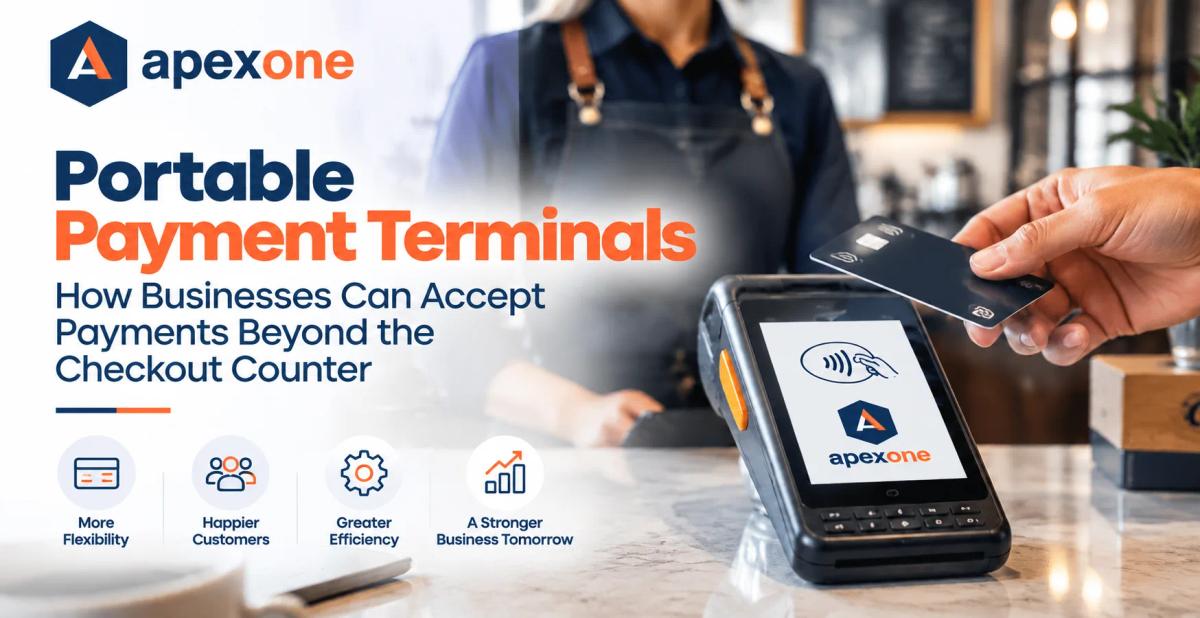
Portable Payment Terminals How Businesses Can Accept Payments Beyond the Checkout Counter
Modern businesses are no longer limited to fixed checkout counters. Learn how portable payment terminals help retailers, restaurants, service providers, and growing businesses accept payments wherever customers need them.
How Modern Payment Technology Helps Businesses Create Faster, More Flexible Customer Payment Experiences
The way businesses accept payments has changed significantly. Customers are no longer limited to traditional checkout experiences where every transaction must happen at a fixed counter. Today, they expect businesses to provide faster, easier, and more convenient ways to complete purchases wherever they interact with a brand.
Whether a customer is dining at a restaurant table, receiving a service at their home, shopping inside a retail store, attending an event, or purchasing from a mobile business, the payment experience has become an important part of overall customer satisfaction.
This change has created a growing demand for flexible payment technology. Businesses are moving beyond traditional countertop devices and adopting portable payment terminals that allow them to accept secure payments wherever the transaction takes place.
Portable payment terminals help businesses create more convenient checkout experiences by combining mobility, security, and modern payment capabilities. Instead of forcing customers and employees to follow outdated payment processes, businesses can bring the payment experience closer to the customer.
For growing businesses, this flexibility is becoming more than a convenience. It is becoming an important part of improving customer service, increasing operational efficiency, and creating better payment workflows.
Apex One Payments helps businesses upgrade their payment experience with modern payment terminals and POS hardware solutions designed to support different industries and business environments.
Why Businesses Are Moving Beyond Traditional Checkout Counters
For many years, businesses relied on a simple payment model. Customers would visit a checkout counter, employees would process the transaction, and the payment process would end there.
This approach worked well when most businesses operated from a single location with a fixed customer journey. However, customer expectations have changed, and businesses today need more flexible ways to serve their customers.
Modern customers value speed and convenience. They do not want unnecessary waiting times, complicated payment steps, or outdated processes that make completing a purchase more difficult.
For businesses, a fixed checkout location can sometimes create operational challenges. Restaurants may need employees to leave customers waiting while payments are processed. Service professionals may need to collect payments after leaving a customer location. Retail businesses may experience long checkout lines during busy periods.
Portable payment terminals solve these challenges by allowing businesses to accept payments closer to where customers are being served.
The benefit is not only faster payment acceptance. It is the ability to create a smoother customer experience from start to finish.
What Are Portable Payment Terminals?
Portable payment terminals are wireless payment devices that allow businesses to accept credit card, debit card, and contactless payments without being restricted to a single checkout location.
Unlike traditional countertop payment terminals, portable terminals are designed for mobility. They allow employees and business owners to process transactions wherever customers need to complete payments.
Modern portable payment terminals can support different payment methods, including EMV chip cards, contactless cards, and digital wallets. This gives businesses the flexibility to meet changing customer preferences while maintaining secure payment processing.
A portable payment terminal typically combines secure payment technology with wireless connectivity, allowing businesses to maintain reliable payment acceptance in different environments.
For businesses that operate beyond a traditional storefront or serve customers in multiple locations, portable payment technology provides a practical way to improve payment convenience without sacrificing security or professionalism.
How Portable Payment Terminals Improve Customer Experience
The payment process is often the final interaction between a customer and a business. Even when a customer has enjoyed their shopping or service experience, a slow or inconvenient checkout process can negatively affect their overall impression.
Portable payment terminals help businesses improve this final interaction by allowing customers to complete payments quickly and conveniently wherever the service happens.
In restaurants, employees can accept payments directly at the table instead of asking customers to wait for a traditional checkout process. This creates a smoother dining experience and allows staff to provide better service.
In retail environments, employees can assist customers throughout the store and complete transactions closer to where purchase decisions happen. This can reduce checkout congestion and create a more personalized shopping experience.
For service businesses, portable payment terminals allow professionals to collect payments immediately after completing work at a customer's location. This removes unnecessary follow-up steps and provides customers with a simple payment experience.
The value of portable payment solutions is not only about moving a device. It is about creating a payment process that matches the way modern customers want to interact with businesses.
Businesses That Benefit From Portable Payment Terminals
Portable payment terminals are valuable for businesses that need flexibility in how and where they accept payments. Different industries use portable payment technology to improve customer experience, reduce operational limitations, and create more efficient workflows.
Restaurants and Hospitality Businesses
Restaurants are one of the clearest examples of businesses that benefit from portable payment solutions. Customers increasingly expect faster and more convenient dining experiences, including easier ways to complete payments.
With portable payment terminals, restaurant employees can process transactions directly at the table instead of requiring customers to wait for traditional payment procedures.
This improves the customer experience while helping restaurants manage service more efficiently during busy hours.
Businesses looking for specialized solutions can explore restaurant POS systems and payment solutions designed to support modern dining operations.
Retail Stores
Retail businesses can use portable payment terminals to create more flexible checkout experiences. Instead of limiting purchases to one checkout counter, employees can help customers throughout the store and complete transactions where needed.
This approach can be especially useful during busy shopping periods when long checkout lines may affect customer satisfaction.
Portable payment solutions allow retailers to create a faster and more convenient buying experience while supporting the expectations of modern shoppers.
Service Businesses and Field Professionals
Many service businesses operate away from traditional storefronts. Contractors, repair companies, home service providers, and mobile professionals often need reliable ways to accept payments after completing work at customer locations.
A portable payment terminal allows these businesses to accept secure card payments immediately without depending on cash payments or delayed invoicing processes.
This improves convenience for customers and helps businesses complete transactions more efficiently.
Events, Markets, and Mobile Businesses
Businesses operating at events, markets, trade shows, and temporary locations often need payment solutions that can adapt to changing environments.
Portable payment terminals provide the flexibility needed to accept payments without requiring a permanent checkout setup.
This allows businesses to create professional payment experiences wherever they operate.
Portable Payment Terminals vs Traditional Card Terminals: Understanding the Difference
Traditional card terminals have been an important part of payment processing for many years. They provide businesses with a reliable way to accept card payments from customers at a fixed checkout location.
However, as customer expectations and business operations continue to evolve, many companies are looking for payment solutions that provide more flexibility than a traditional countertop terminal can offer.
The main difference between portable payment terminals and traditional card terminals is mobility. A traditional terminal is designed around a fixed checkout environment, while a portable payment terminal allows businesses to move the payment experience closer to the customer.
For example, a retail store using a traditional terminal may require every customer to complete payment at a specific counter. A business using portable payment technology can allow employees to complete transactions throughout the store, creating a more convenient shopping experience.
Similarly, restaurants using traditional payment setups may require customers to wait for payment processing at a specific location, while portable terminals allow employees to complete payments directly at the table.
The choice between these solutions depends on the way a business operates. Companies with fixed checkout environments may find traditional terminals suitable, while businesses focused on flexibility, customer experience, and mobility may benefit from portable payment solutions.
Key Features Businesses Should Look For in Portable Payment Terminals
Choosing the right portable payment terminal requires more than simply selecting a device that accepts payments. Businesses should consider how the technology fits into their daily operations and how it improves the customer experience.
The right solution should provide reliable performance, support modern payment methods, and help employees complete transactions efficiently.
Wireless Connectivity and Reliable Performance
One of the biggest advantages of portable payment terminals is the ability to process payments without being connected to a fixed checkout station.
Reliable wireless connectivity allows businesses to accept payments in different environments while maintaining a consistent payment experience.
Whether employees are serving customers at tables, assisting shoppers inside a store, or completing transactions at customer locations, dependable connectivity is essential.
A payment device should make business operations easier, not create additional challenges. Reliable performance ensures customers can complete payments quickly when they are ready.
Support for Multiple Payment Methods
Customer payment preferences continue to expand. Many customers now expect businesses to support different ways of paying, including traditional credit cards, debit cards, contactless payments, and digital wallets.
A modern portable payment terminal should support these payment methods to provide customers with greater convenience.
Offering flexible payment options can help businesses create better experiences and serve customers according to their preferred payment habits.
Secure Payment Processing
Security is one of the most important considerations when choosing payment technology. Businesses need solutions that protect customer payment information while maintaining a smooth checkout experience.
Modern payment terminals are designed with security features that help protect transactions and provide customers with confidence when completing payments.
A secure payment environment strengthens customer trust and helps businesses maintain professional payment operations.
Battery Life and Ease of Use
Since portable payment terminals are designed for mobility, battery performance and usability are important factors for businesses.
Employees should be able to use the device throughout daily operations without frequent interruptions or complicated processes.
A well-designed portable payment terminal should feel natural within the business workflow and allow employees to focus on customers instead of managing technology problems.
Integration With POS Systems and Business Operations
The best payment solutions work as part of a complete business system. A portable payment terminal should not operate as an isolated device but should support the wider payment and operational needs of the business.
Integration with POS systems, reporting tools, and payment processing services can help businesses improve visibility and manage transactions more effectively.
Businesses looking for complete payment technology can explore POS hardware and payment solutions that support different industries and operational requirements.
How Portable Payment Terminals Help Businesses Improve Efficiency
Portable payment terminals are not only designed to improve customer convenience. They also help businesses create more efficient workflows.
When employees can accept payments where customers are being served, businesses can reduce unnecessary steps and improve daily operations.
For restaurants, this can mean faster table service and smoother payment completion. For retailers, it can mean shorter checkout lines and more flexible customer assistance. For service businesses, it can mean immediate payment collection after completing a job.
These improvements help businesses save time while creating a more organized payment process.
Better payment efficiency also allows employees to focus more on customer service rather than spending time managing complicated payment procedures.
How Portable Payment Solutions Support Business Growth
As businesses grow, their payment needs often become more complex. A payment system that works for a small operation today may not provide enough flexibility as customer volume increases or business operations expand.
Portable payment terminals give businesses the ability to adapt without completely changing their payment infrastructure.
A company may expand into new locations, participate in events, introduce new services, or change the way customers interact with the brand. Flexible payment technology helps businesses adjust to these changes more easily.
Investing in the right payment solution is not only about solving current challenges. It is about preparing the business for future opportunities.
Choosing the Right Portable Payment Solution for Your Business
Every business has different payment requirements. A restaurant, retail store, contractor, and mobile service provider may all need different features from their payment technology.
Before choosing a portable payment terminal, businesses should consider where payments will happen, how customers prefer to pay, how employees will use the device, and how the solution supports future growth.
A restaurant may prioritize fast tableside transactions. A service provider may need a lightweight and reliable device for customer locations. A retailer may need flexible checkout options to improve the shopping experience.
The right payment solution should match the business workflow instead of forcing the business to adapt around limitations.
Businesses should also consider the payment provider behind the technology. A reliable payment partner can provide guidance, support, and solutions that align with business goals.
Portable Payment Terminals and the Future of Business Payments
The future of payments is becoming more flexible, connected, and focused on customer convenience. Businesses are no longer limited to traditional payment environments because customers expect payment experiences that fit naturally into their daily activities.
Portable payment terminals represent this shift by allowing businesses to accept payments wherever transactions happen. Instead of designing the customer experience around the limitations of payment equipment, businesses can use technology that adapts to their operations.
This flexibility is becoming increasingly valuable across different industries. Restaurants are creating faster tableside payment experiences. Retailers are improving customer flow inside stores. Service providers are collecting payments immediately after completing work.
As businesses continue adopting digital payment solutions, portable payment technology will play an important role in helping companies provide faster and more convenient customer experiences.
The future of payments is not only about processing transactions. It is about creating a smoother connection between customers, employees, and businesses.
Why Choosing the Right Payment Partner Matters
Selecting the right portable payment terminal is important, but choosing the right payment partner is equally valuable.
A payment solution should do more than provide hardware. Businesses need a partner that understands their operations, helps identify the right technology, and provides support as their payment needs change.
The wrong payment setup can create unnecessary complexity, while the right solution can improve efficiency and make everyday operations easier.
Businesses should consider factors such as payment reliability, available hardware options, processing support, customer service, and the ability to scale as the business grows.
A strong payment partner helps businesses make informed decisions instead of simply providing a device and leaving them to manage everything alone.
How Apex One Payments Helps Businesses Accept Payments Anywhere
Apex One Payments helps businesses create flexible payment experiences through modern payment processing solutions, POS technology, and payment hardware designed for different business environments.
Whether a business needs to improve customer checkout experiences, accept payments outside a traditional counter, upgrade outdated equipment, or support changing customer expectations, Apex provides solutions designed around real business needs.
From restaurants that need faster tableside payments to service businesses that collect payments at customer locations, Apex understands that every business requires a different approach to payment technology.
Apex One Payments focuses on helping businesses create smoother payment workflows by combining reliable payment processing with practical technology solutions.
Businesses can explore payment terminals and POS hardware options or learn more about industry-specific solutions through business payment solutions designed for different operational needs.
For businesses ready to improve their payment experience, contact Apex One Payments to discuss a solution that fits their goals.
Final Thoughts: Flexible Payment Technology Helps Businesses Grow
The way businesses accept payments continues to change. Customers expect faster, simpler, and more convenient payment experiences, while businesses need technology that helps them operate more efficiently.
Portable payment terminals provide businesses with the flexibility to accept payments beyond traditional checkout counters and create better customer interactions.
Whether a business operates in a restaurant, retail environment, service industry, event space, or mobile setting, flexible payment technology can help remove limitations and improve the overall payment experience.
The right payment solution is not only about accepting transactions. It is about creating a better way for businesses and customers to connect.
By investing in modern payment technology, businesses can improve efficiency, support customer expectations, and prepare for future growth.
Frequently Asked Questions
What is a portable payment terminal?
A portable payment terminal is a wireless payment device that allows businesses to accept credit card, debit card, and contactless payments without being restricted to a fixed checkout location.
How does a portable payment terminal work?
A portable payment terminal connects wirelessly to payment processing systems and allows businesses to complete secure transactions using cards, contactless payments, and digital wallets from different locations.
What businesses can benefit from portable payment terminals?
Portable payment terminals can benefit restaurants, retailers, service businesses, contractors, event vendors, mobile businesses, and any company that needs flexible payment acceptance.
Are portable payment terminals secure?
Yes. Modern portable payment terminals are designed with security features that help protect payment information and support secure transaction processing for businesses and customers.
Can portable payment terminals accept contactless payments?
Yes. Many modern portable payment terminals support contactless cards and digital wallet payments, allowing customers to complete transactions using convenient payment methods.
What is the difference between a portable payment terminal and a mobile payment terminal?
Portable payment terminals and mobile payment terminals both provide flexible payment acceptance. The terminology can vary, but both refer to payment devices that allow businesses to process transactions outside a traditional fixed checkout location.
Why should businesses upgrade from traditional payment terminals?
Businesses may benefit from upgrading when they need faster checkout experiences, more payment flexibility, improved customer convenience, or the ability to accept payments in different locations.
How can Apex One Payments help businesses choose the right payment solution?
Apex One Payments helps businesses identify payment solutions based on their industry, operational needs, and customer experience goals, including payment terminals, POS systems, and payment processing services.