
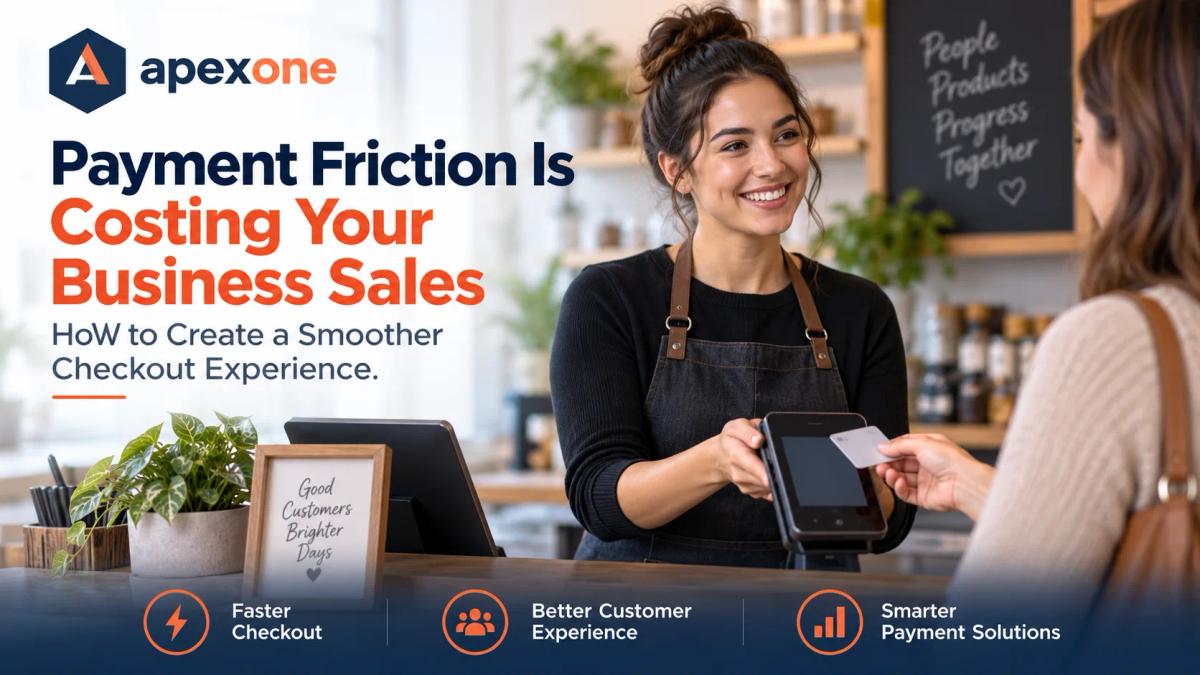
Payment Friction Is Costing Your Business Sales How to Create a Smoother Checkout Experience
Payment friction happens when customers face delays, confusion, failed payments, limited payment options, or a checkout process that feels harder than it should. This guide explains how smoother payments can improve customer experience, protect sales, reduce manual work, and help small businesses get paid with more confidence.
Payment should be the easiest part of doing business.
A customer chooses a product, books a service, visits your office, approves an invoice, or agrees to move forward with a job. At that point, the business has already done the hard work. The customer is ready. The sale is close. The only thing left is collecting the payment.
But this is exactly where many businesses lose momentum. The terminal is slow. The online checkout feels confusing. The invoice link is hard to find. The customer wants to tap their card, but the device does not support it. A payment fails for no clear reason. A staff member has to retry the transaction. A customer says they will pay later. An invoice sits unpaid for another week.
That is payment friction.
Payment friction is anything that makes it harder, slower, or less comfortable for a customer to complete a payment. It can happen in person, online, over the phone, through invoices, through payment links, or at the front desk. Sometimes it is caused by old hardware. Sometimes it is caused by limited payment options. Sometimes it is caused by unclear billing, disconnected systems, weak support, or a checkout process that does not match how customers want to pay.
For small businesses, payment friction is not just a technical issue. It can cost real sales, create staff frustration, weaken customer trust, and slow down cash flow.
Apex One Payments helps businesses review their payment processing solutions, POS systems, merchant services, payment terminals, online payments, and customer payment workflows so owners can create a smoother checkout experience that supports the way people actually pay today.
What Is Payment Friction?
Payment friction is any delay, confusion, or extra step that makes payment harder for the customer or harder for the business to manage.
It may be a slow card terminal at the counter. It may be an online checkout page with too many steps. It may be a payment link that does not look clear or trustworthy. It may be an invoice that does not explain the amount properly. It may be a phone payment process where staff have to manually enter card details. It may be a failed transaction that forces the customer to try again.
The customer may not use the words “payment friction,” but they feel it immediately. They feel it when checkout takes too long. They feel it when they cannot use their preferred payment method. They feel it when they are unsure if the payment went through. They feel it when a business makes payment more complicated than the purchase itself.
A business owner should care about this because payment is a high-trust moment. The customer is giving money. The process should feel simple, secure, and professional.
When payment feels difficult, the customer may hesitate. When payment feels smooth, the business looks more reliable.
Why Payment Friction Costs More Than You Think
Many business owners only look at payment cost through fees.
That makes sense because processing rates, monthly fees, equipment charges, PCI fees, and statement charges affect profit. But payment friction has another cost that is harder to see.
It can cost sales.
A customer may abandon an online checkout because the process takes too long. A client may delay paying an invoice because the payment method is inconvenient. A retail shopper may get frustrated if the card terminal keeps failing. A service customer may promise to pay later because payment was not easy at the moment they were ready. A patient may avoid calling back because the billing process feels uncomfortable.
These are not always dramatic moments. Most customers do not announce that the payment process made them leave. They simply move on, delay payment, or choose another business next time.
Payment friction is not only about convenience. It is about protecting the sale after the customer has already decided to buy.
A Smoother Checkout Experience Builds Trust
Checkout is often the final impression a customer has before leaving.
A great experience can be weakened by a poor payment moment. A customer may enjoy the meal, like the service, trust the provider, or find the right product, but if the payment process feels slow, outdated, or confusing, the final impression changes.
A smooth checkout experience does the opposite. It tells the customer that the business is organized. It makes payment feel safe. It gives the staff more confidence. It reduces awkward delays. It helps the customer leave with a positive impression.
For Apex One Payments, this topic fits naturally because the company is not only offering card processing. Apex is helping businesses create better payment experiences through merchant services, POS systems, terminals, and payment support.
Slow Payment Terminals Create Checkout Friction
One of the most common causes of payment friction is outdated or unreliable hardware.
An old terminal may still process cards, but it may do so slowly. It may take too long to connect. It may struggle with chip cards. It may not support contactless payments. It may fail during busy hours. It may make employees retry transactions while customers wait.
A retail store needs fast checkout. A restaurant needs smooth payment flow during rush hours. A healthcare office needs calm and professional front-desk payments. A service business needs flexible payment tools when the customer is ready to pay.
A slow terminal does not just slow the machine. It slows the sale.
Businesses that still use old or limited hardware should review Apex’s POS terminals and payment hardware. For qualified businesses, Apex also offers a Free Dejavoo QD2 card payment terminal, which can help reduce the upfront hardware barrier when upgrading payment acceptance.
Limited Payment Options Can Turn Ready Customers Away
Customers want choice.
Some prefer chip cards. Some prefer tap-to-pay. Some use mobile wallets. Some want to pay online. Some want a payment link. Some want to pay by invoice. Some may need to pay over the phone. Some may want to complete payment after business hours.
When a business only supports one or two payment methods, it may create friction without realizing it.
A customer who is ready to pay should not have to adjust to an outdated process. The payment experience should meet the customer where they are.
This is why payment flexibility matters. Payment friction often happens when a customer wants to pay one way and the business can only accept another.
A strong payment setup does not mean accepting every possible method without thinking. It means choosing the right mix of payment options for the business, the customer, and the transaction.
That is where merchant services for small business become important. A good provider should help the owner understand what payment methods are useful, what tools are needed, and how the payment workflow should be structured.
Online Checkout Should Feel Simple
Online payment friction is easy to overlook.
A business may have an online payment option, but that does not mean the experience is good. The checkout may have too many steps. The page may not look trustworthy. The customer may be unsure what they are paying for. The form may not work well on mobile. The payment may fail without a clear reason. The customer may not receive a proper confirmation.
Every small problem creates doubt.
Online checkout should feel clear, secure, and simple. The customer should know the amount, understand the next step, trust the payment page, and receive confirmation after payment.
For small businesses, the takeaway is simple: a payment page is not just a technical tool. It is part of the customer experience.
Apex’s payment processing solutions can support businesses that want to improve how customers pay online, in person, and through other payment channels.
Payment Links Can Reduce Friction When Used Correctly
Payment links are one of the simplest ways to make payments easier.
A business can send a secure payment link by email, text, invoice, or message. The customer can open the link and pay without visiting the business in person. This is useful for contractors, professional firms, healthcare offices, salons, repair shops, consultants, mobile businesses, and service providers.
But payment links must be used properly.
The link should be clear. The amount should make sense. The customer should understand what they are paying for. The payment page should look professional. The receipt should be easy to confirm. The business should be able to track the payment afterward.
A payment link can reduce friction because it removes the need to chase checks, take card numbers over the phone, or wait until the customer returns in person.
The real value of payment links is not only speed. It is timing. When the customer is ready to pay, the business should make payment easy.
Invoice Friction Slows Down Cash Flow
Many businesses lose time because invoices are harder to pay than they should be.
A professional firm may send invoices but wait weeks for payment. A contractor may finish a job and then follow up several times. A healthcare office may send balances that patients delay paying. A consultant may wait on retainer payments. A repair business may need to collect after approval.
Sometimes customers do not avoid payment because they refuse to pay. They delay because the process is not easy.
An invoice should clearly show what the customer owes, why they owe it, how they can pay, and when payment is due. The easier the payment step feels, the faster the business can collect.
Businesses that rely on invoices should review Apex’s professional services payment solutions, especially when payment delays are creating unnecessary follow-up work.
Invoice friction is often a quiet problem. It does not always look like a lost sale, but it can still damage cash flow.
Staff Time Is Also Part of the Cost
Payment friction affects staff as much as customers.
Employees are the ones who deal with slow terminals, failed payments, confusing checkout steps, unclear invoice status, and customer questions. When the payment process is not smooth, staff spend more time fixing problems instead of serving customers.
They may retry cards. They may explain why the payment failed. They may manually update records. They may search for invoice status. They may compare deposits with reports. They may call customers again and again. They may ask a manager to solve issues that should have been simple.
This creates an operational cost.
The business may not see it as a separate fee on the merchant statement, but it still costs time. And staff time matters. Every extra minute spent fighting with a payment system is time taken away from customer service, sales, scheduling, billing, or operations.
A smoother payment experience helps employees work with more confidence. It also makes the business feel more professional from the inside.
Better Reporting Reduces Payment Confusion
Payment friction does not end when the customer pays.
A business still needs to understand what happened after the transaction. Was the payment approved? Was it settled? Was it connected to the right invoice, order, patient account, table, customer, or job? Did it appear in the right batch? Was it refunded? Was there a chargeback? Did the deposit match the report?
Disconnected payment systems make these questions harder.
Better reporting helps the business see payment activity more clearly. It reduces confusion, saves staff time, and helps owners understand cash flow.
A good payment setup should not only help the customer pay. It should help the business track the payment after it happens.
Payment Friction Can Increase Abandoned Payments
In ecommerce, abandoned checkout is easy to understand. A customer adds something to the cart, reaches checkout, faces friction, and leaves.
But abandoned payments also happen outside ecommerce.
A patient says they will call back later. A client delays an invoice. A service customer says they will pay when they get home. A contractor sends a payment request that goes ignored. A customer walks out because checkout is taking too long. A shopper decides not to complete the purchase because the business does not accept the payment method they prefer.
Payment friction creates delay, and delay creates risk.
The longer the gap between “I want to buy” and “I have paid,” the higher the chance that the business has to chase the payment or lose the sale.
Apex’s role is to help businesses shorten that gap. A smoother checkout experience makes it easier for customers to complete payment while the decision is still fresh.
Payment Security Should Not Create Unnecessary Friction
A payment experience should be smooth, but it should also feel secure.
Customers want convenience, but they also want confidence. A payment page that looks suspicious, a phone process that feels unprofessional, or a staff member writing card details manually can make customers uncomfortable.
Security and convenience should work together.
Businesses should use proper payment tools instead of unsafe workarounds. They should avoid storing card details casually, avoid manual notes with sensitive payment information, and make sure customers receive clear receipts and confirmations.
A smooth payment experience should never mean a careless payment experience. It should mean the customer can pay easily while the business keeps the process professional.
Restaurants Need Fast Payment Flow
Restaurants feel payment friction quickly.
During busy hours, a slow payment process can affect the entire service flow. A guest may wait too long to close a check. A counter line may build. A server may lose time retrying a card. A takeout order may be delayed because payment tools are not connected. A catering deposit may be harder to collect than necessary.
Restaurants need payment speed, but they also need reporting clarity.
Tips, refunds, online orders, takeout, delivery, gift cards, deposits, and daily batches all need to make sense after the rush ends. A checkout process that feels smooth for guests should also be manageable for the team.
Apex One Payments supports restaurant POS systems for businesses that need better checkout, payment tools, and smoother daily operations.
Retail Stores Need Checkout That Matches Customer Expectations
Retail checkout should feel quick and natural.
Customers may shop in-store, buy online, ask about pickup, return items, use a mobile wallet, or expect tap-to-pay. When checkout is slow or limited, the retail experience suffers.
A retail store should not lose momentum at the register. The customer has already decided to buy. The payment step should support that decision, not interrupt it.
Apex One Payments’ retail payment processing solutions can help retailers review checkout flow, payment acceptance, reporting, and customer convenience.
Healthcare Offices Need Calm and Clear Payment Experiences
Healthcare payments require care.
A patient may pay a copay at the front desk, receive a balance later, call to pay over the phone, or use an online payment option. The payment experience should feel respectful, secure, and easy to understand.
Payment friction in healthcare can create stress for both patients and staff. A confusing payment process may lead to delayed balances, more phone calls, manual follow-ups, and unclear records.
Healthcare offices need payment tools that support clear communication and easier collection without making the patient experience uncomfortable.
Apex One Payments’ healthcare payment processing solutions fit naturally here because healthcare practices need organized, secure, and patient-friendly payment workflows.
Service Businesses Need Flexible Ways to Get Paid
Service businesses often get paid outside a normal checkout counter.
A contractor may need a deposit before work begins. A repair business may collect after approval. A consultant may send an invoice after a milestone. A salon may collect deposits or final payments. A mobile service provider may take payment at the job site.
When the payment process is not flexible, the business ends up chasing money.
Payment links, virtual terminals, mobile terminals, invoices, and card payment options can all reduce friction when they match the way the business works.
Apex One Payments supports payment processing for service businesses, helping owners choose payment tools that fit real customer interactions instead of forcing every payment through one rigid process.
The Cheapest Processor May Not Create the Best Experience
Many business owners compare payment processors by price first.
That is understandable. Fees matter. Processing costs matter. Equipment costs matter. But the cheapest option is not always the best business decision.
A provider with low advertised pricing may still create problems if support is weak, reporting is unclear, hardware is outdated, online tools are limited, or the customer payment experience is poor.
The better question is not only, “What will this cost?” The better question is, “Will this payment setup help my business collect payments faster, serve customers better, reduce confusion, and protect revenue?”
Business owners can use the Apex One Payments payment savings calculator to start reviewing their current processing costs and then look deeper at whether their full payment experience needs improvement.
How to Create a Smoother Checkout Experience
A smoother checkout experience starts with looking at how customers actually pay.
Business owners should review what happens at every payment moment. How long does in-person checkout take? Do customers ask for payment methods the business does not support? Are invoices easy to pay? Are payment links clear? Do online payments feel trustworthy? Do staff have to retry transactions often? Are receipts easy to understand? Do reports match deposits? Is support available when something breaks?
These questions reveal where friction exists.
The goal is not to add every payment tool available. The goal is to remove the steps that slow customers down and confuse the business.
A smoother checkout experience should make payment faster, clearer, and more comfortable. It should also help the business track payments after they happen.
This is where the right combination of POS systems, payment terminals, online payment processing, payment links, invoices, reporting, and merchant services can make a real difference.
How Apex One Payments Can Help Reduce Payment Friction
Apex One Payments can help businesses look at the full payment experience, not only the transaction fee.
That includes how customers pay, how staff process payments, how invoices are collected, how payment links are used, how terminals perform, how reports are reviewed, how deposits are tracked, and how the business handles support issues.
Apex supports payment processing, merchant services, POS systems, credit card processing, payment terminals, online payment processing, business payment processing, and industry-specific payment solutions. This gives business owners a single place to start reviewing what is working and what needs improvement.
For some businesses, the answer may be better payment hardware. For others, it may be payment links, virtual terminal access, invoice tools, improved reporting, or a more suitable merchant services setup.
The right payment solution should fit the business, not force the business to adjust around weak tools.
Business owners who want to improve their payment experience can explore Apex’s merchant guides and payment resources or contact Apex One Payments to discuss a better checkout workflow.
Final Thoughts: Frictionless Payments Help Protect the Sale
Payment friction is easy to ignore until it starts costing sales.
A slow terminal, confusing invoice, missing payment option, failed transaction, weak report, or clunky online checkout may seem small in the moment. But these problems can quietly damage customer experience, delay cash flow, waste staff time, and reduce trust.
Customers want payment to be simple. Business owners need payment to be reliable. Staff need tools that work. The payment process should support the sale instead of becoming another obstacle.
A smoother checkout experience can help customers pay with confidence, help employees work with less stress, and help owners understand payment activity more clearly.
Apex One Payments helps businesses review their current payment setup and choose better payment processing solutions, merchant services for small business, POS terminals and payment hardware, online payment tools, and business payment workflows.
When payment feels easy, customers are more likely to complete the sale. When payment feels professional, the business earns more trust. And when payment tools work together, the owner gets a clearer path to better cash flow, better service, and better growth.
FAQs
What is payment friction?
Payment friction is anything that makes it harder, slower, or more confusing for a customer to complete a payment. It can include slow checkout, limited payment options, failed transactions, confusing invoices, unclear payment links, or outdated payment terminals.
How does payment friction cost a business sales?
Payment friction can cause customers to delay payment, abandon checkout, leave without buying, or choose another business in the future. It can also waste staff time and slow down cash flow.
What causes payment friction in small businesses?
Common causes include old payment terminals, limited payment methods, slow online checkout, confusing invoices, disconnected payment tools, weak reporting, payment errors, and poor customer support from the payment provider.
How can a business reduce checkout friction?
A business can reduce checkout friction by offering the right payment methods, using reliable POS systems and payment terminals, making invoices easier to pay, using clear payment links, improving online checkout, and choosing merchant services that support the full payment workflow.
Are payment links useful for reducing payment friction?
Yes. Payment links can make it easier for customers to pay remotely without visiting the business in person or giving card details over the phone. They are useful for invoices, deposits, service payments, patient balances, and follow-up payments.
Does payment friction only happen online?
No. Payment friction can happen online, in person, over the phone, through invoices, at the front desk, or during mobile service payments. Any payment process that slows down or confuses the customer can create friction.
Can better payment processing improve customer experience?
Yes. Better payment processing can make checkout faster, payment options more flexible, invoices easier to pay, and reporting clearer for the business. This can create a smoother experience for both customers and staff.
How can Apex One Payments help with payment friction?
Apex One Payments helps businesses review payment processing, POS systems, terminals, merchant services, online payments, payment links, invoices, and reporting so they can create a smoother checkout experience and reduce payment-related problems.