
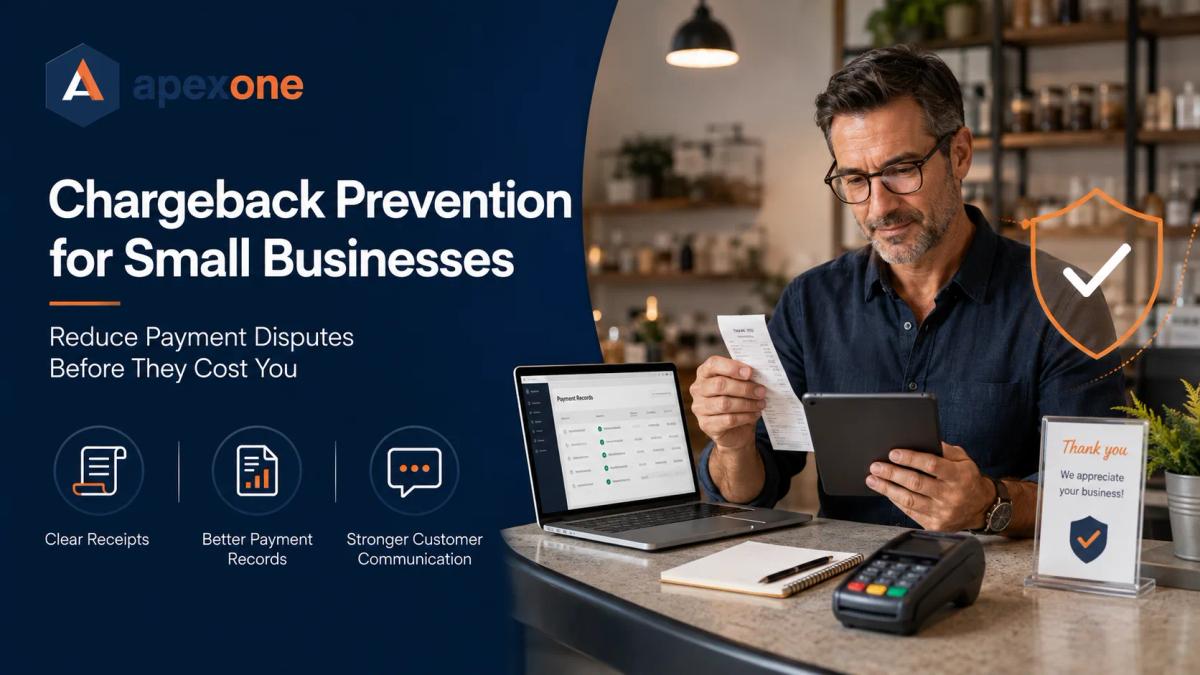
Chargeback Prevention for Small Businesses Reduce Payment Disputes Before They Cost You
Chargebacks can cost small businesses time, money, and customer trust. Learn how better payment records, clear policies, secure payment methods, and the right merchant services support can help reduce disputes before they become expensive.
Chargebacks are one of those business problems that many owners do not think about until one actually happens. A customer pays by card, the transaction looks normal, the sale is completed, and the product is delivered or the service is performed. Everything looks finished until days or weeks later, when the business receives a dispute notice.
Suddenly, the money may be pulled back from the merchant account, and the business has to respond with evidence. The owner or manager may need to search through receipts, invoices, emails, signed approvals, delivery records, refund policies, and transaction details just to prove that the payment was valid.
For a small business, this is more than an inconvenience. A chargeback can affect cash flow, staff time, customer relationships, and confidence in the payment system. It can also create stress because many business owners are not fully prepared for what happens after a customer disputes a card payment.
A chargeback happens when a cardholder questions a payment with their card issuer. The words “dispute” and “chargeback” are often used together because a customer dispute can lead to funds being held or taken back from the merchant while the issue is reviewed. No business can prevent every chargeback, but a business can reduce the risk with better payment practices, clearer records, and stronger communication.
That is where chargeback prevention for small businesses becomes important. The goal is not to make payment acceptance harder. The goal is to make payments clearer, better documented, easier to verify, and easier to defend if a dispute happens.
For a business using modern payment processing solutions, chargeback prevention should be part of the full payment setup, not something the owner thinks about only after money has already been lost.
Why Chargebacks Are a Bigger Problem for Small Businesses
Large companies usually have teams, systems, and processes for handling disputes. Small businesses usually do not. In a small business, the owner, manager, receptionist, bookkeeper, or front desk employee may be the person trying to understand what happened, find records, and respond before the deadline.
That time matters. A restaurant owner may need to pull receipt records from a busy weekend. A contractor may need to find signed job approval. A salon may need to show that an appointment was completed. A professional service firm may need to prove that the client approved an invoice. A retail store may need to confirm that an item was picked up or delivered.
When records are weak, the business has a harder time responding. Even one or two disputes can feel serious when the business is small, the transaction amount is high, or the owner is already managing payroll, rent, inventory, employees, and daily operations.
Chargebacks are not only about fraud. They can also happen because of confusion, poor communication, unclear policies, duplicate billing concerns, refund disagreements, delivery problems, or a customer not recognizing the business name on their statement.
In many cases, better payment setup and better documentation can reduce the chances of a customer filing a dispute in the first place.
The Most Common Reasons Small Businesses Get Chargebacks
Most chargebacks start with a customer feeling that something is wrong. Sometimes the customer is right. Sometimes there is a misunderstanding. Sometimes the issue is fraud. Sometimes it is a simple communication problem that could have been prevented.
A customer may dispute a payment because they do not recognize the business name on their card statement. Another customer may believe they were charged twice. Someone else may claim that the product or service was not delivered as expected. In other cases, the customer may say they did not authorize the transaction, did not understand the refund policy, or could not reach the business for help.
Service-based businesses may face disputes when invoice descriptions are too vague or when there is no clear proof that the customer approved the work. Retail businesses may face disputes when delivery or pickup records are missing. Recurring businesses may face disputes when customers forget about a scheduled payment or do not understand the billing terms.
This is why chargeback prevention is not only a payment issue. It is also a communication issue. A business that accepts card payments needs clear receipts, clear descriptions, clear policies, and clean records.
The payment itself may only take a few seconds. But if that payment is disputed later, the business needs enough information to explain what happened.
Chargebacks Are Not Always Fraud
Many business owners think chargebacks only happen when someone uses a stolen card. That is one reason businesses are often surprised when a real customer files a dispute.
A payment dispute can happen even when the customer actually visited the business, received the product, used the service, or agreed to the charge. For example, a customer may not recognize the billing descriptor on their statement. They may see a legal business name instead of the public store name. Instead of calling the business, they call the card issuer and dispute the charge.
A customer may forget that they agreed to a recurring payment. Another customer may not understand the cancellation policy. A client may be unhappy with the result of a service and try to reverse the payment instead of requesting a resolution directly from the business.
This is why small businesses should not treat chargebacks as only a fraud problem. Fraud prevention matters, but chargeback prevention also includes customer communication, invoice clarity, policy visibility, payment verification, and recordkeeping.
Why Clear Business Information Matters
One of the simplest ways to reduce payment disputes is making sure customers recognize the business they paid. This sounds basic, but it is often overlooked.
A customer may know your business as “Downtown Auto Repair,” but the card statement may show a different legal name. Another customer may visit a salon under one brand name, but the merchant account may show another name. That confusion can create disputes.
For a small business, the payment setup should make sense to the customer. Receipts should clearly show the business name. Contact information should be easy to find. Invoices should clearly explain what the client is paying for. Payment pages should look connected to the real business. Refund or cancellation policies should not be hidden.
A customer who recognizes the charge is less likely to panic, assume fraud, and file a dispute.
Better Receipts Can Prevent Confusion
Receipts are more than proof of payment. They are one of the first lines of defense against chargebacks.
A weak receipt only shows an amount. A stronger receipt shows what was purchased, when it was purchased, how the customer paid, and how the business can be contacted. This may seem simple, but clear receipts can make a major difference when a customer checks their statement days or weeks later.
For service businesses, receipts should be especially clear. A contractor should avoid vague descriptions like “service fee.” A salon should show the actual service performed. A professional firm should include the invoice number or service period. A retail business should include product or order details.
When receipts are clear, customers are less likely to forget what the charge was for. If a dispute happens, the business also has stronger records to review.
This is where the right POS system and merchant services setup can help. Good payment records make it easier to understand the transaction later instead of relying on memory, screenshots, or scattered paperwork.
Card-Present Payments Are Usually Easier to Defend Than Keyed Payments
Not all card transactions carry the same level of dispute risk. A card-present transaction means the customer physically used the card, chip, tap, or swipe at the time of payment. A card-not-present transaction happens when the card is not physically presented. This can include online payments, phone payments, manually keyed transactions, invoices, and some payment links.
Card-not-present payments are common and necessary for many businesses, but they usually require more careful documentation because the customer was not physically in front of the business at checkout.
For small businesses, the practical lesson is simple. Use secure in-person payment methods when the customer is present. Avoid manually keying card numbers unless it is necessary. For remote payments, use clear invoices, payment links, written approvals, and strong records.
A business should not make every payment more complicated, but it should match the payment method to the risk.
Invoices Need More Than an Amount Due
Invoices are common for contractors, professional firms, consultants, healthcare offices, and service businesses. But an invoice that only shows a dollar amount is not enough.
A good invoice should answer the customer’s basic questions before those questions become problems. The invoice should clearly explain what the payment is for, when the service was performed, who approved it, when it is due, what payment options are available, and who the customer can contact with questions.
A clear invoice helps the customer understand the charge before they pay. It also helps the business respond if the customer later disputes the payment.
For example, a contractor invoice should include the job address, service description, agreed amount, deposit details, and completed work notes. A consulting invoice should include project milestone details. A professional service firm should include invoice numbers, service period, and approved billing details. A healthcare office should clearly label patient responsibility or balance collection.
Better invoices reduce confusion. Less confusion usually means fewer disputes.
Apex One Payments supports service businesses through business payment solutions, and this type of payment workflow is exactly where stronger invoicing, payment acceptance, and reporting can make a real difference.
Refund and Cancellation Policies Should Be Easy to Find
Many chargebacks happen because the customer and the business disagree about refunds. The customer believes they should get money back. The business believes the sale was final, the appointment was missed, the product was delivered, or the service was completed.
This is where clear policies matter. A refund policy should not only exist. It should be visible before payment.
For a small business, this may include a refund policy on invoices, a cancellation policy on appointment confirmations, a deposit policy for service work, a return policy on receipts, a recurring billing policy for memberships, or a project approval policy for milestone-based work.
The clearer the policy, the easier it is to avoid confusion. This does not mean businesses should write complicated legal language on every receipt. It means customers should understand what they are agreeing to before payment is taken.
A clear policy can also help the business prepare better evidence if a dispute happens later.
Recurring Billing Needs Extra Clarity
Recurring billing can be very helpful for small businesses. Gyms use memberships. Salons may sell packages. Professional firms may bill monthly retainers. Healthcare offices may collect payment plans. Service businesses may charge for ongoing maintenance.
But recurring billing can also create disputes when customers forget about the payment or do not understand the billing schedule.
A customer may agree to a recurring charge in January and dispute it in March because they do not recognize it. That is why recurring billing needs clear authorization.
The business should make the billing schedule easy to understand. The customer should know the amount, timing, service covered, cancellation process, and business contact information.
For recurring services, a reminder message can also help. It gives the customer a chance to ask questions before the charge becomes a dispute.
The goal is not only to collect automatically. The goal is to collect clearly.
Deposits and High-Ticket Payments Need Stronger Documentation
Some businesses collect deposits before providing service. This is common for contractors, event businesses, repair shops, custom orders, professional services, consultants, and certain appointment-based businesses.
Deposits can reduce business risk, but they can also create chargeback risk if the customer later says they did not understand the terms.
For deposits, the business should clearly document what the deposit covers, whether it is refundable, when the remaining balance is due, what happens if the customer cancels, what work or product is being reserved, and what approval was given before payment.
High-ticket payments also need stronger records because the financial impact of a dispute is bigger. A small dispute is frustrating. A large dispute can create a serious cash flow issue.
For larger payments, businesses should avoid rushed or unclear payment collection. They should use invoices, signed approvals, clear descriptions, and proper payment records.
Customer Communication Can Stop a Dispute Before It Starts
Many customers file disputes because they do not know how to reach the business or they do not believe the business will help. This is preventable.
A simple contact process can reduce disputes. Receipts should show contact information. Invoices should show who to contact with questions. The website should make support easy to find. The team should respond quickly to billing questions. Refund or correction processes should be clear.
Customers have the right to dispute certain card charges, so businesses cannot remove that possibility. But many problems can be solved before the customer feels the need to call their card issuer.
Sometimes a fast explanation, receipt copy, billing correction, or fair resolution is better than letting a problem become a formal chargeback.
Good communication is not only customer service. It is chargeback prevention.
Payment Records Are Your Protection
When a chargeback happens, the business needs evidence. Not opinions. Not memory. Not “we are sure the customer came in.” The business needs actual records.
This may include receipts, invoices, signed agreements, proof of delivery, service records, communication history, refund policy acknowledgment, order details, customer authorization, or appointment records.
This is why business owners should not wait until a dispute happens to think about documentation. A strong payment system should help keep useful records from the beginning.
Useful payment records may include the transaction date and time, payment method, receipt details, invoice details, customer contact information, service or product description, refund or cancellation policy, proof of delivery, and proof of service completion.
The more organized the business is, the less stressful dispute response becomes.
Your POS System Plays a Bigger Role Than You Think
Many business owners think of a POS system as a checkout tool. But a good POS system also helps create better business records.
It can connect payments with items, services, receipts, customer details, staff activity, and reporting. This matters when a payment is questioned.
A retail store can look up the exact item sold. A restaurant can review the transaction details. A salon can connect the payment with the appointment. A service business can review invoice and payment history. A healthcare office can track patient balance payments.
Better POS and payment records do not guarantee that a business will win every dispute, but they make the business more organized. That organization matters.
Businesses that need better terminals, POS devices, or payment hardware can review POS hardware and payment terminals through Apex One Payments.
What to Do When a Chargeback Happens
Even with good prevention, disputes may still happen. When they do, the business should respond calmly and quickly.
First, read the dispute reason carefully. Do not assume every dispute is fraud. Look at the transaction details, customer name, receipt, invoice, delivery record, service record, and communication history.
Then decide whether to accept the dispute or challenge it. Not every chargeback is worth fighting. Sometimes the amount is small, the evidence is weak, or the customer issue is legitimate.
But when the payment was valid and the business has strong records, it may make sense to respond. The key is preparation.
A small business should not be searching through messy files at the last minute. The better your payment records are before the dispute, the stronger your response can be after the dispute.
Warning Signs Your Business Is at Higher Risk for Chargebacks
Some businesses naturally carry more chargeback risk than others. That does not mean they are bad businesses. It means they need stronger payment practices.
A business may have higher risk if it accepts many card-not-present payments, takes deposits before work is completed, sells custom products or services, handles high-ticket payments, uses recurring billing, has unclear refund policies, manually keys many card numbers, or receives frequent customer complaints about billing.
A business may also be at higher risk if customers do not recognize the billing descriptor, receipts are unclear, records are incomplete, or the team does not respond quickly to billing questions.
If several of these apply to your business, chargeback prevention should not be optional. It should be part of your payment strategy.
Why the Cheapest Processor May Not Be the Best Choice
Many small businesses choose a payment processor by looking only at rates. That is understandable. Every business wants to control costs.
But chargebacks show why the cheapest option is not always the best option. When a dispute happens, you need more than a low rate.
You need clear reporting, access to transaction records, reliable support, and a payment setup that fits your business model. You also need a provider that can help you understand what the dispute means and what information may be needed.
A payment processor should not leave you confused when money is pulled from your account. This is why merchant services for small business should be evaluated as a full support system, not just a rate sheet.
A slightly lower rate does not help much if your business loses time, revenue, and confidence because payment records are weak or support is hard to reach.
How Apex One Payments Can Help Small Businesses Reduce Payment Dispute Risk
Chargeback prevention starts with better business habits, but the right payment setup makes those habits easier to follow.
Apex One Payments helps small businesses review their payment processing, payment hardware, POS tools, and merchant services setup so owners can better understand how they accept payments and where improvements may be needed.
For small businesses, that can mean clearer payment acceptance options, better card payment workflows, stronger POS records, payment terminals that fit the business environment, invoice and payment-link support for service businesses, and merchant services guidance when questions come up.
Apex One Payments is not just about accepting cards. The real value is helping business owners choose payment solutions that make sense for how they actually operate.
Restaurants need speed and receipt clarity. Retailers need product-level records. Contractors need invoices, deposits, and job documentation. Professional firms need retainers, payment links, and billing visibility. Healthcare offices need secure and organized patient payment workflows. Gyms and salons need recurring billing clarity.
Every business is different, but the goal is the same: make payments easier to accept, easier to track, and easier to understand.
Business owners can also use the Apex One Payments payment savings calculator to review their current processing costs, or contact Apex One Payments to discuss a payment setup that better fits their business.
A Practical Chargeback Prevention Approach for Small Businesses
Chargeback prevention does not need to be complicated. It starts with simple, consistent habits that make the payment experience clearer for both the customer and the business.
Make sure your business name is recognizable on card statements. Send clear receipts after every payment. Use detailed invoices for service-based payments. Explain refund and cancellation policies before payment. Keep proof of delivery, service completion, or customer approval. Use secure payment tools for in-person and remote transactions. Get clear authorization for recurring billing. Respond quickly to customer billing questions.
These steps do not create a perfect shield against every dispute, but they do create a stronger payment process. The goal is not perfection. The goal is better protection.
Final Thoughts: Chargeback Prevention Is Really About Payment Clarity
Chargebacks are stressful, but they are not always random. Many disputes come from confusion, weak records, unclear policies, poor communication, or payment methods that do not fit the situation.
Small businesses can reduce risk by making payments more transparent from the start. Clear receipts help customers recognize charges. Detailed invoices help explain payments. Strong POS records help defend valid transactions. Visible policies reduce refund confusion. Fast communication can solve problems before they become disputes.
The right merchant services provider can also help business owners build a better payment process instead of reacting after something goes wrong.
Chargeback prevention for small businesses is not only about fighting disputes. It is about building a cleaner payment experience.
A business that accepts payments clearly, documents them properly, and communicates well is in a stronger position when questions come up.
If your current payment setup makes it hard to track transactions, understand disputes, or explain charges to customers, it may be time to review your system.
Apex One Payments can help you explore better payment processing solutions, compare POS hardware and payment terminals, review merchant guides and payment resources, or speak with a payment specialist about a setup that supports your business.
FAQs
What is chargeback prevention for small businesses?
Chargeback prevention for small businesses means using better payment practices, clearer receipts, stronger records, secure payment methods, and clear customer communication to reduce the chances of payment disputes.
Can a small business prevent every chargeback?
No. A business cannot prevent every chargeback because customers have the right to dispute certain card charges. However, businesses can reduce risk by keeping better records, using clear policies, and improving payment workflows.
What causes most chargebacks?
Chargebacks can happen because of fraud, customer confusion, unclear billing descriptors, refund disagreements, duplicate billing concerns, delivery issues, or poor communication between the customer and business.
Why do customers dispute charges they actually made?
Customers may dispute real charges if they do not recognize the business name, forget the purchase, misunderstand the policy, cannot reach the business, or believe the product or service was not delivered as expected.
Do clear receipts help prevent chargebacks?
Yes. Clear receipts help customers recognize what they paid for and give the business better records if a dispute happens later.
Are card-not-present payments riskier?
Card-not-present payments can carry higher dispute risk because the customer is not physically presenting the card. Businesses should use clear invoices, payment links, customer authorization, and strong documentation for remote payments.
How can service businesses reduce chargebacks?
Service businesses can reduce chargebacks by using detailed invoices, written approvals, clear deposit terms, service completion records, payment links, and visible refund or cancellation policies.
How can Apex One Payments help with chargeback prevention?
Apex One Payments helps small businesses review their payment processing setup, POS tools, payment hardware, invoices, reporting, and merchant services support so they can create a clearer and more organized payment workflow.